Binary Tree Breadth-First Search Depth-First Search Tree
Description Given the root of a binary tree, return the leftmost value in the last row of the tree.
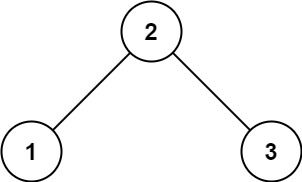
Example 1:
Input: root = [2,1,3]
Output: 1
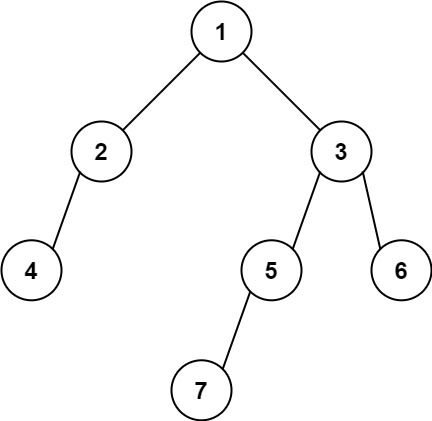
Example 2:
Input: root = [1,2,3,4,null,5,6,null,null,7]
Output: 7
Constraints:
The number of nodes in the tree is in the range [1, 104 ]. -231 <= Node.val <= 231 - 1 Solutions Solution 1 Thinking
The bottom-left value is the first node of the last level in a level-order walk. In BFS the queue front is the leftmost node of the current level.
Record the front at the start of each level and enqueue children. When the queue drains, the last recorded value is the answer. Level order processes the deepest level last.
Python3 Java C++ Go TypeScript Rust
 1
 2
 3
 4
 5
 6
 7
 8
 9
10
11
12
13
14
15
16
17
18
19
# Definition for a binary tree node.
# class TreeNode:
# def __init__(self, val=0, left=None, right=None):
# self.val = val
# self.left = left
# self.right = right
class Solution :
def findBottomLeftValue ( self , root : Optional [ TreeNode ]) -> int :
q = deque ([ root ])
ans = 0
while q :
ans = q [ 0 ] . val
for _ in range ( len ( q )):
node = q . popleft ()
if node . left :
q . append ( node . left )
if node . right :
q . append ( node . right )
return ans
 1
 2
 3
 4
 5
 6
 7
 8
 9
10
11
12
13
14
15
16
17
18
19
20
21
22
23
24
25
26
27
28
29
30
31
32
33
34
35
/**
* Definition for a binary tree node.
* public class TreeNode {
* int val;
* TreeNode left;
* TreeNode right;
* TreeNode() {}
* TreeNode(int val) { this.val = val; }
* TreeNode(int val, TreeNode left, TreeNode right) {
* this.val = val;
* this.left = left;
* this.right = right;
* }
* }
*/
class Solution {
public int findBottomLeftValue ( TreeNode root ) {
Queue < TreeNode > q = new ArrayDeque <> ();
q . offer ( root );
int ans = 0 ;
while ( ! q . isEmpty ()) {
ans = q . peek (). val ;
for ( int i = q . size (); i > 0 ; -- i ) {
TreeNode node = q . poll ();
if ( node . left != null ) {
q . offer ( node . left );
}
if ( node . right != null ) {
q . offer ( node . right );
}
}
}
return ans ;
}
}
 1
 2
 3
 4
 5
 6
 7
 8
 9
10
11
12
13
14
15
16
17
18
19
20
21
22
23
24
25
26
27
28
/**
* Definition for a binary tree node.
* struct TreeNode {
* int val;
* TreeNode *left;
* TreeNode *right;
* TreeNode() : val(0), left(nullptr), right(nullptr) {}
* TreeNode(int x) : val(x), left(nullptr), right(nullptr) {}
* TreeNode(int x, TreeNode *left, TreeNode *right) : val(x), left(left), right(right) {}
* };
*/
class Solution {
public :
int findBottomLeftValue ( TreeNode * root ) {
queue < TreeNode *> q {{ root }};
int ans = 0 ;
while ( ! q . empty ()) {
ans = q . front () -> val ;
for ( int i = q . size (); i ; -- i ) {
TreeNode * node = q . front ();
q . pop ();
if ( node -> left ) q . push ( node -> left );
if ( node -> right ) q . push ( node -> right );
}
}
return ans ;
}
};
 1
 2
 3
 4
 5
 6
 7
 8
 9
10
11
12
13
14
15
16
17
18
19
20
21
22
23
24
25
26
/**
* Definition for a binary tree node.
* type TreeNode struct {
* Val int
* Left *TreeNode
* Right *TreeNode
* }
*/
func findBottomLeftValue ( root * TreeNode ) int {
q := [] * TreeNode { root }
ans := 0
for len ( q ) > 0 {
ans = q [ 0 ]. Val
for i := len ( q ); i > 0 ; i -- {
node := q [ 0 ]
q = q [ 1 :]
if node . Left != nil {
q = append ( q , node . Left )
}
if node . Right != nil {
q = append ( q , node . Right )
}
}
}
return ans
}
 1
 2
 3
 4
 5
 6
 7
 8
 9
10
11
12
13
14
15
16
17
18
19
20
21
22
23
24
25
26
27
28
29
30
31
/**
* Definition for a binary tree node.
* class TreeNode {
* val: number
* left: TreeNode | null
* right: TreeNode | null
* constructor(val?: number, left?: TreeNode | null, right?: TreeNode | null) {
* this.val = (val===undefined ? 0 : val)
* this.left = (left===undefined ? null : left)
* this.right = (right===undefined ? null : right)
* }
* }
*/
function findBottomLeftValue ( root : TreeNode | null ) : number {
let ans = 0 ;
const q = [ root ];
while ( q . length ) {
ans = q [ 0 ]. val ;
for ( let i = q . length ; i ; -- i ) {
const node = q . shift ();
if ( node . left ) {
q . push ( node . left );
}
if ( node . right ) {
q . push ( node . right );
}
}
}
return ans ;
}
 1
 2
 3
 4
 5
 6
 7
 8
 9
10
11
12
13
14
15
16
17
18
19
20
21
22
23
24
25
26
27
28
29
30
31
32
33
34
35
36
37
38
39
40
41
42
// Definition for a binary tree node.
// #[derive(Debug, PartialEq, Eq)]
// pub struct TreeNode {
// pub val: i32,
// pub left: Option<Rc<RefCell<TreeNode>>>,
// pub right: Option<Rc<RefCell<TreeNode>>>,
// }
//
// impl TreeNode {
// #[inline]
// pub fn new(val: i32) -> Self {
// TreeNode {
// val,
// left: None,
// right: None
// }
// }
// }
use std :: cell :: RefCell ;
use std :: collections :: VecDeque ;
use std :: rc :: Rc ;
impl Solution {
pub fn find_bottom_left_value ( root : Option < Rc < RefCell < TreeNode >>> ) -> i32 {
let mut queue = VecDeque :: new ();
queue . push_back ( root );
let mut res = 0 ;
while ! queue . is_empty () {
res = queue . front (). unwrap (). as_ref (). unwrap (). borrow_mut (). val ;
for _ in 0 .. queue . len () {
let node = queue . pop_front (). unwrap ();
let mut node = node . as_ref (). unwrap (). borrow_mut ();
if node . left . is_some () {
queue . push_back ( node . left . take ());
}
if node . right . is_some () {
queue . push_back ( node . right . take ());
}
}
}
res
}
}
Solution 2 Thinking
BFS uses an \(O(w)\) queue. DFS only needs to remember the first time a greater depth appears.
A left-then-right preorder meets the leftmost node of each depth first; update the answer only when the depth is strictly larger. Extra space is the recursion stack, and the result matches level order.
Python3 Java C++ Go TypeScript Rust
 1
 2
 3
 4
 5
 6
 7
 8
 9
10
11
12
13
14
15
16
17
18
19
20
21
# Definition for a binary tree node.
# class TreeNode:
# def __init__(self, val=0, left=None, right=None):
# self.val = val
# self.left = left
# self.right = right
class Solution :
def findBottomLeftValue ( self , root : Optional [ TreeNode ]) -> int :
def dfs ( root , curr ):
if root is None :
return
dfs ( root . left , curr + 1 )
dfs ( root . right , curr + 1 )
nonlocal ans , mx
if mx < curr :
mx = curr
ans = root . val
ans = mx = 0
dfs ( root , 1 )
return ans
 1
 2
 3
 4
 5
 6
 7
 8
 9
10
11
12
13
14
15
16
17
18
19
20
21
22
23
24
25
26
27
28
29
30
31
32
33
34
35
36
/**
* Definition for a binary tree node.
* public class TreeNode {
* int val;
* TreeNode left;
* TreeNode right;
* TreeNode() {}
* TreeNode(int val) { this.val = val; }
* TreeNode(int val, TreeNode left, TreeNode right) {
* this.val = val;
* this.left = left;
* this.right = right;
* }
* }
*/
class Solution {
private int ans = 0 ;
private int mx = 0 ;
public int findBottomLeftValue ( TreeNode root ) {
dfs ( root , 1 );
return ans ;
}
private void dfs ( TreeNode root , int curr ) {
if ( root == null ) {
return ;
}
dfs ( root . left , curr + 1 );
dfs ( root . right , curr + 1 );
if ( mx < curr ) {
mx = curr ;
ans = root . val ;
}
}
}
 1
 2
 3
 4
 5
 6
 7
 8
 9
10
11
12
13
14
15
16
17
18
19
20
21
22
23
24
25
26
27
28
29
30
/**
* Definition for a binary tree node.
* struct TreeNode {
* int val;
* TreeNode *left;
* TreeNode *right;
* TreeNode() : val(0), left(nullptr), right(nullptr) {}
* TreeNode(int x) : val(x), left(nullptr), right(nullptr) {}
* TreeNode(int x, TreeNode *left, TreeNode *right) : val(x), left(left), right(right) {}
* };
*/
class Solution {
public :
int ans = 0 ;
int mx = 0 ;
int findBottomLeftValue ( TreeNode * root ) {
dfs ( root , 1 );
return ans ;
}
void dfs ( TreeNode * root , int curr ) {
if ( ! root ) return ;
dfs ( root -> left , curr + 1 );
dfs ( root -> right , curr + 1 );
if ( mx < curr ) {
mx = curr ;
ans = root -> val ;
}
}
};
 1
 2
 3
 4
 5
 6
 7
 8
 9
10
11
12
13
14
15
16
17
18
19
20
21
22
23
24
25
/**
* Definition for a binary tree node.
* type TreeNode struct {
* Val int
* Left *TreeNode
* Right *TreeNode
* }
*/
func findBottomLeftValue ( root * TreeNode ) int {
ans , mx := 0 , 0
var dfs func ( * TreeNode , int )
dfs = func ( root * TreeNode , curr int ) {
if root == nil {
return
}
dfs ( root . Left , curr + 1 )
dfs ( root . Right , curr + 1 )
if mx < curr {
mx = curr
ans = root . Val
}
}
dfs ( root , 1 )
return ans
}
 1
 2
 3
 4
 5
 6
 7
 8
 9
10
11
12
13
14
15
16
17
18
19
20
21
22
23
24
25
26
27
28
29
30
31
32
/**
* Definition for a binary tree node.
* class TreeNode {
* val: number
* left: TreeNode | null
* right: TreeNode | null
* constructor(val?: number, left?: TreeNode | null, right?: TreeNode | null) {
* this.val = (val===undefined ? 0 : val)
* this.left = (left===undefined ? null : left)
* this.right = (right===undefined ? null : right)
* }
* }
*/
function findBottomLeftValue ( root : TreeNode | null ) : number {
let mx = 0 ;
let ans = 0 ;
function dfs ( root , curr ) {
if ( ! root ) {
return ;
}
dfs ( root . left , curr + 1 );
dfs ( root . right , curr + 1 );
if ( mx < curr ) {
mx = curr ;
ans = root . val ;
}
}
dfs ( root , 1 );
return ans ;
}
 1
 2
 3
 4
 5
 6
 7
 8
 9
10
11
12
13
14
15
16
17
18
19
20
21
22
23
24
25
26
27
28
29
30
31
32
33
34
35
36
37
38
39
40
41
42
// Definition for a binary tree node.
// #[derive(Debug, PartialEq, Eq)]
// pub struct TreeNode {
// pub val: i32,
// pub left: Option<Rc<RefCell<TreeNode>>>,
// pub right: Option<Rc<RefCell<TreeNode>>>,
// }
//
// impl TreeNode {
// #[inline]
// pub fn new(val: i32) -> Self {
// TreeNode {
// val,
// left: None,
// right: None
// }
// }
// }
use std :: cell :: RefCell ;
use std :: collections :: VecDeque ;
use std :: rc :: Rc ;
impl Solution {
fn dfs ( root : & Option < Rc < RefCell < TreeNode >>> , cur : i32 , max : & mut i32 , res : & mut i32 ) {
if root . is_none () {
return ;
}
let root = root . as_ref (). unwrap (). borrow ();
Self :: dfs ( & root . left , cur + 1 , max , res );
Self :: dfs ( & root . right , cur + 1 , max , res );
if * max < cur {
* max = cur ;
* res = root . val ;
}
}
pub fn find_bottom_left_value ( root : Option < Rc < RefCell < TreeNode >>> ) -> i32 {
let mut max = 0 ;
let mut res = 0 ;
Self :: dfs ( & root , 1 , & mut max , & mut res );
res
}
}